

10 Essential Camera Shots Every Video Creator Must Know
Wide, medium, close-up, and movement: the core shots that control pacing, clarity, and emotion in any video or film project.
On this page
Every frame answers a question for the viewer: Where are we? Who matters here? What should I feel? Camera shots are the grammar you use to answer those questions without stating them out loud. Change the distance between lens and subject by a few feet, or tilt the camera up instead of down, and the meaning of the same moment shifts entirely.
Below is a working knowledge of the ten shots that carry most of the load in narrative film, documentary, commercials, and live production — what each shot is, when it earns its place, a concrete example, and one tip worth internalizing.
Shot grammar: distance, angle, and motion
Three variables define almost any shot. Distance (how much of the subject and surroundings you include) controls intimacy and context. Angle (where the camera sits relative to the subject's eyeline) shapes power and perspective. Motion (whether the camera moves and how) directs energy and attention.
Shots also carry an implied unit of measurement: the human body. A "medium shot" or "close-up" is defined by where the frame cuts the person — at the waist, the chest, the chin. The shots below run roughly from widest to tightest, then cover the angle and motion choices that modify them.
1. The establishing / wide shot
The establishing shot places the audience in a location before the story narrows its focus. The subject is small within the frame; the environment dominates. Its job is orientation — geography, scale, time of day, weather, mood.
When to use it: at the start of a scene, after a location change, or any time the viewer needs to re-anchor in space. Skip it and an audience feels subtly disoriented even if they can't name why.
Example: A documentary on coastal fishing opens on a trawler the size of a thumbnail against a gray, heaving sea. Before you've met a single crew member, you grasp the scale of what they're up against.
Tip: Give the eye a path. A road, shoreline, or fence line leading toward your eventual subject turns a pretty postcard into a shot that means something.
2. The full shot
The full shot frames the subject head to toe with a little air around them. Unlike the establishing shot, the person is now the clear focus, but you still read their whole body — posture, gait, costume, how they occupy a space.
When to use it: when physicality is the story. Dance, action, comedy that lives in body language, or a character's first entrance where you want the audience to size them up.
Example: A product launch video holds a full shot of a presenter striding onto a stage. The walk, the confidence, the outfit register at once, setting tone before a word is spoken.
Tip: Watch the headroom and the feet. Cutting off the feet by accident reads as a mistake; doing it deliberately is a choice — know which one you're making.
3. The medium shot
Cutting the frame around the waist, the medium shot is the conversational workhorse. It shows enough body language for gesture and stance while bringing the face close enough to read. Most dialogue and direct-address content lives here.
When to use it: interviews, presentations, tutorials, and the connective tissue of dramatic scenes. It's neutral in the best sense — comfortable to watch for long stretches.
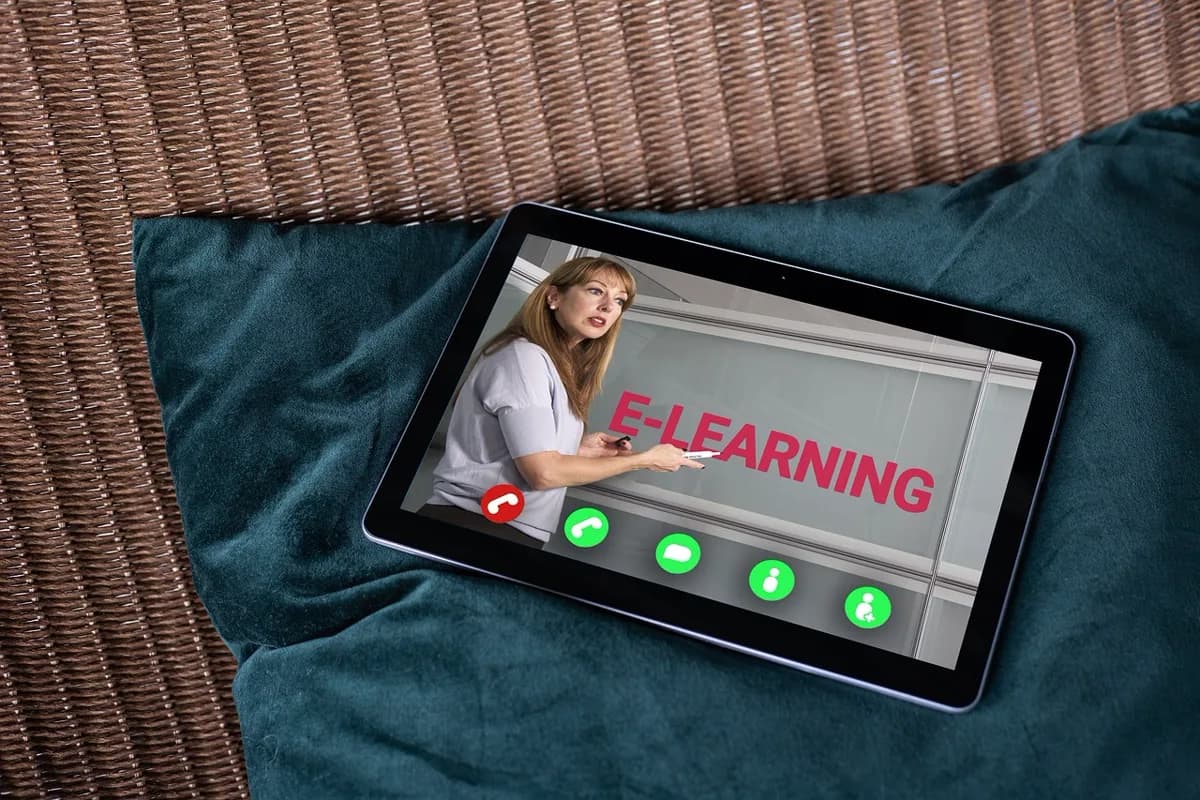
Example: An online course instructor delivers a lesson from a medium shot. Hand gestures stay in frame, while the face remains close enough to hold attention.
Tip: Mind the eyeline and lens height. Put the lens at the subject's eye level for a level, honest read; even a small height mismatch quietly skews how trustworthy they seem.
4. The close-up
The close-up fills the frame with the face, roughly from the top of the head to the collarbone. Environment falls away; emotion takes over. This is the shot that makes audiences feel what a character feels.
When to use it: emotional peaks, reactions, and decisive beats. Reserve it — a close-up lands hardest when the scene has been wider up to that point, so the cut inward feels like leaning in.
Example: In a short film, a character reads a letter. The wide shot showed the room; the cut to a close-up as the face collapses is where the audience's chest tightens.
Tip: Protect the eyes. Light so there's a catchlight — a small specular highlight in the iris. Dead, dark eyes flatten even the best performance.
5. The extreme close-up
Tighter still, the extreme close-up isolates a single detail: an eye, trembling hands, a finger on a trigger, a ring being removed. It magnifies significance, telling the audience this detail matters with no dialogue at all.
When to use it: sparingly, at moments of high tension or revelation, and to plant or pay off a story-critical object.
Example: A thriller cuts to an extreme close-up of a phone screen lighting up with one word. The information and the dread arrive in the same frame.
Tip: Focus is unforgiving this tight. Lock it on the exact plane that carries the meaning — a breath of movement throws it soft.
6. The over-the-shoulder shot
The over-the-shoulder (OTS) frames one person from behind and to the side of another, so the foreground shoulder and head anchor the edge of frame while the subject faces camera. It binds two people into a shared space and gives dialogue its sense of exchange.
When to use it: conversations, confrontations, negotiations — anywhere the relationship between two people drives the scene.
Example: In an interview-style piece, an OTS over the host frames the guest mid-answer. The viewer feels seated at the table rather than watching from outside it.
Tip: Keep your shots on a consistent side of the line between the two people — the 180-degree rule. Cross it and your subjects appear to swap places, jolting the audience.
7. The point-of-view shot
A point-of-view (POV) shot shows what a character sees, as if the camera were their eyes. Paired with a shot of the character looking, it stitches the viewer into their experience.
When to use it: to build subjectivity, tension, or immersion — a character peering around a corner, scanning a crowd, or reading something the audience needs to share.
Example: A first-person adventure piece cuts to a POV traveling down a dim corridor, every doorway a spike of suspense because you're the one walking it.
Tip: Sell it with motion and imperfection. Real seeing isn't a locked tripod — a touch of handheld sway and a believable eye height make POV convincing.
8. The two-shot
The two-shot frames two subjects together, usually at a similar size, emphasizing their connection or contrast within a single frame rather than cutting between them.
When to use it: to establish a relationship before you start intercutting, to play comedy and reaction in one take, or to show power dynamics through who occupies more space.
Example: A webinar holds a two-shot of host and guest as they riff on a question. Keeping both in frame catches the glances and timing a cutaway would lose.
Tip: Compose for the relationship. Tight together reads as intimacy or alliance; pushed to opposite edges with space between them reads as distance or tension — let the framing do that work.
9. The low- and high-angle shot
Angle is a modifier you can apply to any distance, and it speaks directly about power. A low-angle shot looks up at the subject, making them loom — dominant, heroic, or threatening. A high-angle shot looks down, shrinking the subject toward vulnerability or insignificance.
When to use it: whenever status is part of the story — a low angle to lend authority, a high angle to expose weakness or isolation.
Example: A brand film shoots its founder from a slightly low angle against open sky — confident and aspirational. Later, a high angle on a lone figure in an empty office sells the problem the product solves.
Tip: A little goes a long way. A few degrees off eye level reads as intentional and grounded; an extreme tilt announces itself and can tip into parody unless that's the point.
10. The tracking shot
A tracking shot moves the camera through space — alongside, ahead of, or behind a subject — typically on a gimbal, dolly, slider, or steadicam. Motion adds energy and continuity, carrying the audience through a moment instead of cutting around it.
When to use it: to follow action, reveal a space gradually, or sustain tension across an unbroken beat. A held, moving take can build more momentum than a dozen quick cuts.
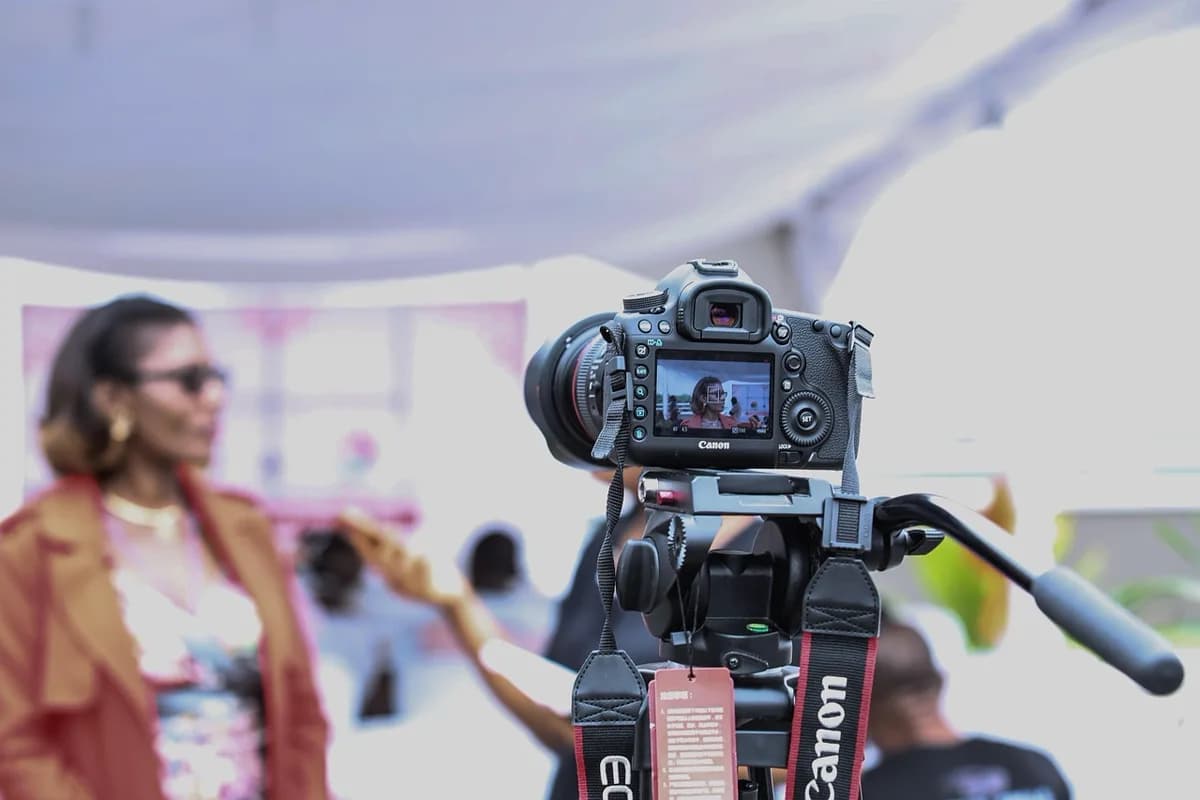
Example: A live event production tracks alongside a presenter walking the floor, the changing background giving the segment forward drive and a sense of place.
Tip: Motivate the move. Motion that follows a subject or reveals new information feels invisible; movement for its own sake feels restless. Match the speed to the emotion of the scene.
Building shots into a sequence
Individual shots are vocabulary; sequences are sentences. The classic pattern moves from wide to tight — establish the space, settle into a medium for the action, punch in to a close-up at the emotional peak — then back out to release. That rhythm of expansion and compression makes a scene feel like it's breathing.
Cut for continuity of eyeline, screen direction, and motion so the audience never has to reorient, and vary your shot sizes between cuts. Jumping from one medium shot to a nearly identical one produces a jarring jump cut; a meaningful change in distance or angle reads as a clean edit.
Once a sequence is cut together, it needs somewhere to live. The gear behind these shots matters too — pair this with our guides to choosing the right microphone and DSLR cameras for video production. Creators working in live production or building a video library can stream the result in real time, host the on-demand version, and restream it to other channels on a platform like dcast.tv.
Master these ten shots and the logic that links them, and framing stops being a guess — every cut becomes a decision about where the audience looks, and what they feel when they get there.
Frequently Asked Questions
What are the basic camera shots?
Wide shot, medium shot, close-up, extreme close-up, and establishing shot.
How do I choose the right shot?
Match the shot to your goal: use wide shots to establish context, close-ups for emotion, and two-shots for dialogue or interaction. Vary framing to avoid monotony.
Where can I find more resources?
Visit dcast.tv for more guides and tools.
dcast-team
Professional video streaming experts helping creators succeed.
Related Articles
Start Your Video Business Today
Join thousands of creators monetizing their content with DCAST.
Get Started Free