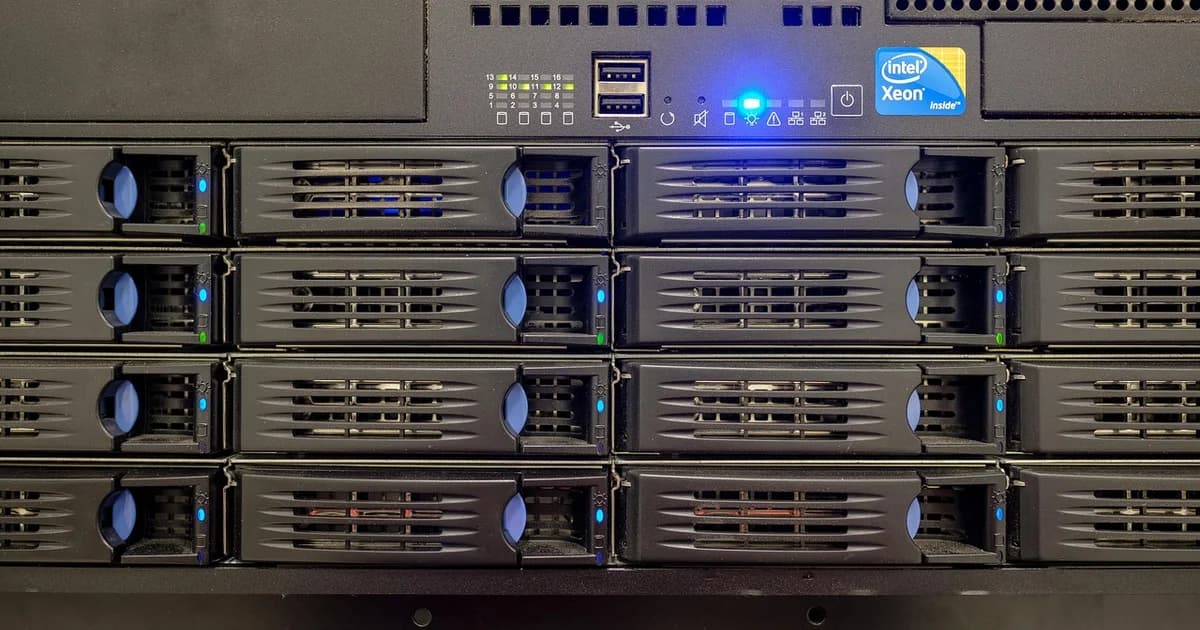
Enterprises today sit on rapidly expanding video libraries. From internal training modules and product demos to global marketing campaigns and live‑streamed events, video has become the primary vehicle for communication, education, and brand storytelling. Yet the sheer volume of footage—often measured in terabytes and growing daily—creates a paradox: organizations recognize the strategic value of video, but many still wrestle with chaotic storage, slow discovery, and fragmented collaboration.
In 2025, the answer lies in a dedicated Video Asset Management (VAM) approach that blends cloud‑scale infrastructure, AI‑enhanced metadata, and rigorous governance. This guide walks you through why VAM matters, how to evaluate and select a platform, practical steps for migration, and forward‑looking trends that will shape the next wave of video‑centric enterprises.
Why Modern Enterprises Require Dedicated Video Asset Management
The Shortcomings of General‑Purpose Digital Asset Management
Traditional Digital Asset Management (DAM) systems excel at cataloguing images, PDFs, and audio files, yet they frequently stumble when confronted with video’s unique demands:
- Limited Searchability – Most DAMs rely on filename or manually entered tags. Without transcript indexing, pinpointing a five‑second clip inside a multi‑hour recording can take minutes—or remain impossible.
- Fragmented Collaboration – Video production involves editors, marketers, legal reviewers, and translators. Conventional DAMs seldom provide real‑time annotation, version branching, or granular permission sets tailored to moving media.
- Scalability Constraints – Video files are orders of magnitude larger than static assets. When storage spikes, legacy DAM architectures can suffer latency, costly scaling, or outright failures.
These gaps surface repeatedly across industries, prompting a shift toward solutions engineered expressly for video.
The Emergence of Video Asset Management (VAM)
A VAM platform treats video as a living, searchable, and reusable business resource. Core capabilities include:
- Rich Metadata & Transcript Indexing – Automatic speech‑to‑text conversion creates searchable transcripts, while AI extracts visual concepts, speaker identities, and scene boundaries.
- Dynamic Version Control – Every edit, subtitle addition, or localized rendition is tracked, ensuring teams always retrieve the approved version.
- Integrated Localization – Built‑in pipelines connect transcription, translation, and captioning services, delivering region‑specific assets without leaving the platform.
- Scalable Cloud Architecture – Object storage, CDN delivery, and pay‑as‑you‑go compute let enterprises expand without disruptive hardware upgrades.
When implemented thoughtfully, VAM transforms a sprawling video archive into a strategic knowledge base.
Core Criteria for Selecting a Scalable VAM Solution
Choosing a platform is not merely a tech decision—it influences workflow efficiency, regulatory compliance, and ultimately revenue generation. Below are the pillars you should weigh.
1. Architectural Scalability
- Elastic Cloud Storage – Look for providers that separate compute from storage, offering tiered buckets (hot, warm, cold) so frequently accessed clips stay fast while archival footage moves to lower‑cost tiers.
- API‑First Design – Robust RESTful or GraphQL endpoints enable custom integrations with CRM, LMS, or ERP systems, preserving existing investments.
- AI Extensibility – The platform should expose hooks for third‑party models (e.g., custom object detection) and ship native services for transcription, OCR, and sentiment analysis.
- Schema Flexibility – Ability to define custom fields (campaign ID, compliance flag, market segment) alongside standard technical attributes.
- Controlled Vocabulary – Centralized taxonomies prevent “brand” vs. “Brand” duplication and facilitate cross‑department reporting.
- Automated Enrichment – Machine‑learning pipelines that auto‑populate tags reduce manual effort and improve consistency.
3. Collaboration & Permissions Model
- Role‑Based Access Control (RBAC) – Granular policies that differentiate viewers, contributors, approvers, and administrators.
- Real‑Time Annotation – Comment threads anchored to timestamps, collaborative storyboarding, and in‑platform preview for stakeholders.
- Workflow Automation – Triggered actions (e.g., send to legal after a new edit is uploaded) streamline handoffs.
4. Localization & Multi‑Language Support
- Built‑In Subtitle Management – Upload, sync, and version subtitles directly within the asset record.
- Translation Memory Integration – Connect to CAT tools so previously translated strings are reused, cutting costs.
- Regional Metadata Tags – Flag assets with market codes, language identifiers, and compliance notes for quick filtering.
5. Security, Compliance, and Auditing
- End‑to‑End Encryption – Both at rest and in transit, meeting standards such as AES‑256 and TLS 1.3.
- Retention Policies – Automated archiving or deletion based on legal hold periods.
- Audit Trails – Immutable logs of who accessed, edited, or exported each asset, essential for regulated sectors.
Building a Robust Organizational Structure for Video Libraries
Even the most feature‑rich VAM cannot compensate for a poorly conceived hierarchy. Think of your video repository as a city: streets (folders) guide traffic, while addresses (filenames) pinpoint destinations.
Naming Conventions That Scale
Adopt a deterministic pattern that conveys essential context at a glance. A recommended template:
[Department]_[ProjectCode]_[YYYYMMDD]_[Version]_[Locale]_[AssetType].ext
- Department – Marketing, Training, Legal, etc.
- ProjectCode – Short alphanumeric identifier.
- Date – ISO format for easy sorting.
- Version – Incremental marker (
v01, v02).
- Locale – Language‑region code (
en-US, fr-FR).
- AssetType –
Full, Teaser, Subtitle.
Example: Marketing_CMP123_20241012_v02_en-US_Full.mp4
Consistent naming reduces reliance on folder depth and empowers search engines to surface relevant results instantly.
Logical Folder Hierarchies
While flat structures benefit from modern search, a modest top‑level categorization aids onboarding and bulk operations. Consider three orthogonal trees:
VideoLibrary/
├── ByFunction/
│   ├── Marketing/
│   ├── Training/
│   └── Communications/
├── ByRegion/
│   ├── NA/
│   ├── EMEA/
│   └── APAC/
└── ByLifecycle/
    ├── Production/
    ├── Review/
    └── Archive/
Each asset lives in one primary branch but retains its full metadata set, allowing cross‑filtering regardless of physical placement.
A well‑designed taxonomy balances breadth and usability. Group tags into four clusters:
| Cluster |
Sample Fields |
| Content |
Topic, Subtopic, Keywords, Audience |
| Technical |
Resolution, Codec, Duration, FrameRate |
| Business |
CampaignID, ProductLine, Owner, CostCenter |
| Temporal |
CaptureDate, ExpirationDate, ReviewCycle |
Encourage owners to fill mandatory fields at ingest; optional fields can be enriched later via AI.
Transitioning from scattered drives or legacy DAM to a modern VAM is a multi‑phase journey. Below is a pragmatic roadmap that minimizes disruption.
Phase 1: Discovery & Requirements Mapping
- Inventory Existing Assets – Run scripts to list all video files, sizes, current storage locations, and usage patterns.
- Stakeholder Interviews – Gather pain points from creators, marketers, compliance officers, and IT.
- Define Success Metrics – Examples: average search time under 10 seconds, reduction of duplicate files by 30%, or 20% faster time‑to‑publish.
Phase 2: Pilot Implementation
Select a manageable subset—perhaps a recent product launch—to test ingestion, metadata mapping, and workflow automation. During the pilot:
- Validate AI transcription accuracy against human reviews.
- Fine‑tune naming conventions and folder mappings.
- Collect feedback on UI ergonomics and permission settings.
Iterate until the pilot meets predefined KPIs, then scale.
Phase 3: Bulk Migration & Enrichment
- Automated Transfer – Leverage cloud‑to‑cloud connectors (e.g., S3 → Azure Blob) to move raw files without downloading locally.
- Metadata Extraction – Deploy batch jobs that run speech‑to‑text, facial recognition, and logo detection, populating the newly defined schema.
- Deduplication Pass – Use hash‑based comparison to collapse identical files, freeing storage and simplifying catalogs.
Phase 4: Governance Rollout
- Draft a Video Governance Charter outlining responsibilities for uploading, reviewing, and retiring assets.
- Implement Approval Workflows that route new uploads through designated reviewers before publishing.
- Schedule Quarterly Audits to verify metadata completeness and permission hygiene.
Phase 5: Organization‑Wide Adoption
- Conduct role‑based training sessions—creators learn ingest best practices, managers master analytics dashboards, and compliance staff practice audit trails.
- Publish quick‑reference guides and embed them within the VAM interface for just‑in‑time assistance.
- Celebrate early wins (e.g., a campaign that cut production time by half) to reinforce adoption momentum.
Harnessing AI to Supercharge Video Management
Artificial intelligence is no longer a futuristic add‑on; it is now integral to efficient VAM.
Automated Transcription & Captioning
State‑of‑the‑art speech‑recognition models achieve near‑human accuracy for major languages. Embedding these services directly into the ingest pipeline yields searchable transcripts instantly, eliminating manual typing.
Visual Content Analysis
Computer vision can detect logos, products, or even emotional cues within frames. Tagging “CoffeeCup” or “HappyCustomer” automatically enriches the asset’s discoverability for marketers seeking brand‑aligned footage.
AI‑driven aspect‑ratio conversion identifies focal points, ensuring that a 16:9 interview remains compelling when repurposed for vertical TikTok stories. This reduces the need for manual re‑editing across platforms.
Predictive Asset Recommendations
Machine‑learning models analyze past usage patterns to suggest which older videos could be refreshed for upcoming campaigns, driving higher reuse rates and lowering production spend.
Governance, Security, and Compliance Considerations
Enterprises operating in finance, healthcare, or public sectors confront strict regulations governing media content.
Data Residency & Sovereignty
Choose a VAM provider that offers region‑specific storage nodes, allowing you to keep EU citizen data within the European Economic Area, for example.
Rights Management
Attach licensing information (expiry dates, usage limits) as metadata fields. Automated alerts can notify owners before a license lapses, preventing inadvertent infringement.
Secure Sharing
Generate expiring, password‑protected links for external partners. Combine this with watermarking to deter unauthorized redistribution.
Audit Readiness
Maintain immutable logs of every action—upload, edit, download, share. Exportable reports satisfy auditors looking for evidence of controlled access.
Measuring the Impact of Your VAM Investment
Quantifying ROI helps justify ongoing budgets and informs continuous improvement.
| Metric |
Calculation Example |
| Average Search Time |
Total time spent locating assets ÷ number of searches |
| Reuse Ratio |
Number of times an asset appears in distinct projects ÷ total assets |
| Storage Savings |
Size of eliminated duplicates ÷ original library size |
| Production Cycle Reduction |
Baseline time from brief to publish – post‑VAM time |
| Compliance Score |
Percentage of assets with up‑to‑date rights metadata |
Regularly track these indicators on a dashboard; look for trends such as decreasing search times or rising reuse ratios as proof of maturity.
Real‑World Illustrative Scenarios (Generic)
Scenario A: Global Consumer Brand
A multinational consumer goods company launches a summer campaign across ten markets. Using a VAM platform, the creative team uploads a master video once, adds AI‑generated transcripts, and triggers automatic translation workflows. Regional marketers receive localized versions within days, each tagged with market‑specific metadata. The result: a unified brand voice, reduced duplication of effort, and a measurable lift in campaign rollout speed.
Scenario B: Financial Services Firm
A bank maintains a library of compliance training videos required for employee certification. By enforcing RBAC and embedding expiry dates in metadata, the firm ensures outdated modules are archived automatically. Auditors can pull a report showing every employee’s last viewed timestamp, satisfying regulatory scrutiny with minimal manual paperwork.
Scenario C: Higher Education Institution
A university records hundreds of lecture series each semester. Through AI‑driven chapter detection, each lecture is split into searchable segments (“Introduction,” “Case Study,” “Conclusion”). Students use keyword search to jump directly to relevant portions, improving study efficiency and boosting course satisfaction scores.
Future Outlook: Where VAM Is Headed Post‑2025
Technology continues to accelerate, and VAM platforms will evolve accordingly.
1. Full‑Stack Content Intelligence
Beyond simple tagging, future systems will correlate video performance metrics (view duration, engagement heatmaps) with business outcomes, recommending content refresh cycles proactively.
As AR/VR and 360° video gain traction, VAM will incorporate spatial metadata, allowing creators to index objects within a virtual environment and retrieve immersive assets just as easily as 2D footage.
3. Edge‑Enabled Processing
Low‑latency edge computing will permit on‑device transcription and encryption, reducing bandwidth consumption for remote shoot locations and enhancing privacy for sensitive recordings.
4. Integrated Monetization Controls
Platforms will natively support rights‑managed streaming, dynamic ad insertion, and royalty tracking, turning internal video libraries into revenue‑generating assets for media‑heavy enterprises.
Closing Perspective: Turning Video Into a Strategic Asset
The era where video sits idle in forgotten folders is ending. In 2025, enterprises that harness a disciplined VAM strategy unlock faster time‑to‑market, stronger brand cohesion, and measurable cost savings. By prioritizing scalable architecture, AI‑augmented metadata, robust governance, and seamless collaboration, you transform a sprawling media collection into a searchable, reusable, and revenue‑friendly knowledge hub.
Platforms such as dcast.tv illustrate how a modern VAM can blend live‑stream orchestration with on‑demand library management, delivering both operational agility and viewer‑centric experiences. Yet technology alone isn’t sufficient; success hinges on clear naming conventions, consistent taxonomy, and ongoing stakeholder education.
Begin with a realistic assessment, pilot with a representative dataset, and iterate based on concrete metrics. As AI continues to mature and immersive formats emerge, the foundations you lay today will position your organization to adapt effortlessly—and to capitalize on every video opportunity that lies ahead.
Keep building with these DCAST guides: scalable VOD platform architecture and video analytics tools for 2025. To host and govern your library end to end, explore DCAST features.