

VR and 360 Video Streaming: The Tech Stack
A deep dive into the technology powering VR and 360-degree video streaming. Learn about equirectangular projection, adaptive streaming, and spatial audio.
On this page
Introduction to VR and 360 Video Streaming
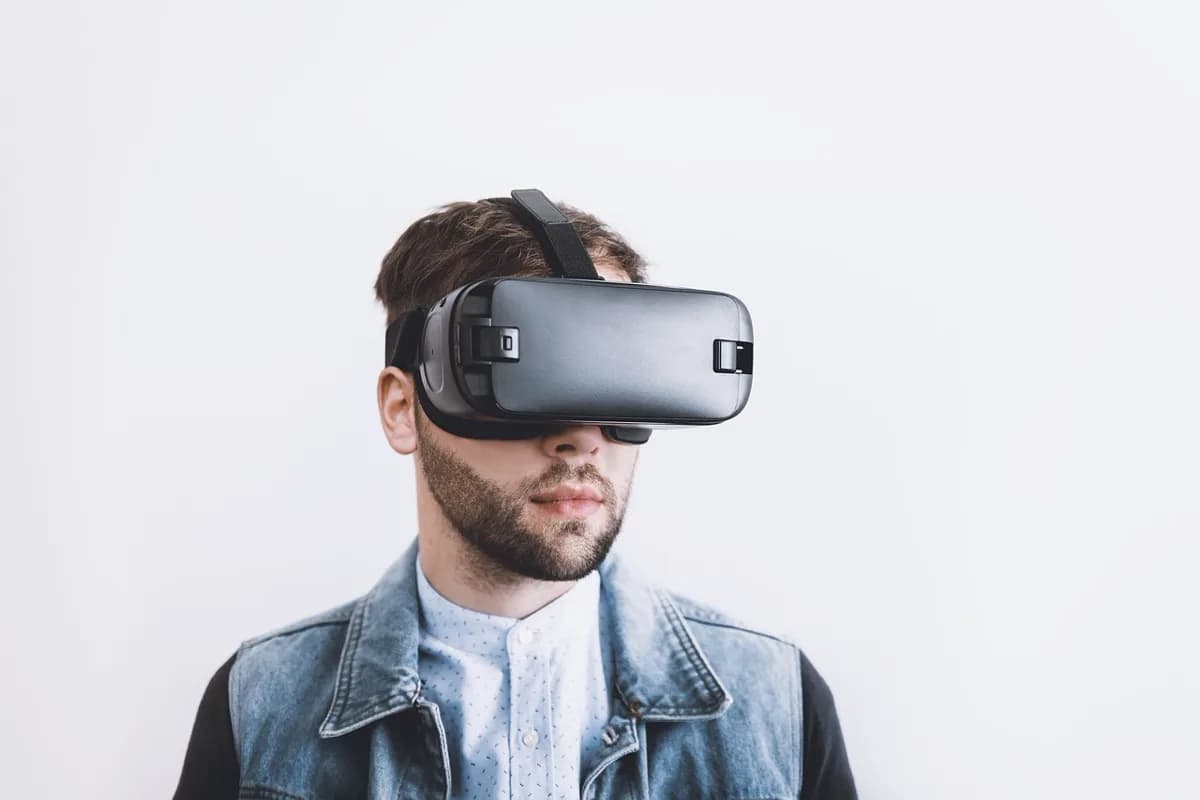
Virtual Reality (VR) and 360-degree video streaming have changed how audiences consume and interact with media. These technologies offer immersive experiences that transport users into virtual worlds, enabling them to explore environments in a natural and intuitive manner. The importance of VR and 360 video streaming lies in their ability to provide unparalleled engagement and interactivity, making them increasingly popular across various industries, from entertainment and gaming to education and real estate.
Current market trends indicate a growing demand for immersive content, driven by advancements in hardware and software technologies. VR headsets are becoming more affordable and accessible, while 360 video cameras are now widely available for content creation. As a result, streaming platforms and content producers are increasingly adopting VR and 360 video streaming to offer unique and engaging user experiences.
Equirectangular Projection
Equirectangular projection is a method of mapping a sphere onto a flat surface, commonly used in VR and 360 video streaming. This projection technique involves wrapping the sphere around a cylinder and then unrolling it, resulting in a rectangular image where the horizontal axis represents longitude and the vertical axis represents latitude.
Mapping a Sphere onto a Flat Surface
In equirectangular projection, a point on the sphere is mapped to a point on the rectangle using the following equations:
[ x = \frac{\theta}{360^\circ} \times \text{width} ]
[ y = \frac{\phi}{180^\circ} \times \text{height} ]
where (\theta) is the longitude and (\phi) is the latitude. This mapping ensures that the entire spherical surface is captured in a single image, making it suitable for panoramic views.
Advantages and Limitations
Advantages:
- Simplicity: Equirectangular projection is easy to implement and understand.
- Compatibility: It is supported by a wide range of VR devices and software applications.
- Scalability: The projection can be easily resized and manipulated.
Limitations:
- Distortions: Equirectangular projections introduce distortions at the poles, making them less suitable for regions near the top or bottom of the image.
- Resolution: High-resolution images are required to maintain visual quality, especially when viewed at close range.
Adaptive Streaming for VR
Adaptive streaming is a technique that dynamically adjusts the quality of a video stream based on the viewer's network conditions and device capabilities. In VR, viewport-dependent adaptive streaming further refines this approach by focusing on the specific portion of the 360-degree video that the user is currently viewing.
Overview of Adaptive Streaming
Adaptive streaming works by breaking the video into small segments and providing multiple bitrate versions of each segment. The streaming server continuously monitors the viewer's network conditions and selects the appropriate segment to deliver, ensuring a smooth and uninterrupted playback experience.
Viewport-Dependent Adaptive Streaming
Viewport-dependent adaptive streaming in VR involves delivering only the portion of the video that is currently in the user's field of view. This approach reduces bandwidth requirements and improves performance, as the server only needs to stream the relevant segments of the 360-degree video. The system continuously adjusts the bitrate based on the user's head movements and network conditions.
Benefits for User Experience and Bandwidth Efficiency
- Enhanced User Experience: By delivering only the necessary content, viewport-dependent adaptive streaming reduces latency and improves interactivity.
- Bandwidth Efficiency: This technique optimizes bandwidth usage, especially in areas with limited connectivity, ensuring that users can enjoy high-quality VR experiences even on lower-bandwidth networks.
Spatial Audio in VR
Spatial audio is a critical component of VR and 360 video streaming, enhancing the immersive experience by simulating sound in a three-dimensional space. Unlike traditional stereo audio, spatial audio creates the illusion of sound coming from specific directions, allowing users to pinpoint the location of audio sources within the virtual environment.
Definition and Importance
Spatial audio systems use advanced algorithms to encode and decode audio signals, ensuring that the sound matches the user's head position and orientation. This technology is essential for creating a fully immersive experience, where users can accurately locate and react to sound cues.
Enhancing Immersive Experience
Spatial audio significantly enhances the realism and engagement of VR experiences. For example, in a VR game, users can hear the footsteps of an approaching enemy from behind, providing a more immersive and interactive experience. In 360 video, spatial audio can make the viewer feel like they are part of the scene, hearing sounds as if they were present in the environment.
Key Technologies and Formats
- Ambisonics: A spherical microphone array and encoding format that captures sound in a 3D space. Ambisonics can be decoded to any number of channels, making it versatile for different playback setups.
- Binaural Audio: Uses head-related transfer functions (HRTFs) to simulate how sound waves are perceived by the human ear. Binaural audio is particularly effective in VR, as it creates a convincing sense of spatial awareness when listened to with headphones.
Encoding and Decoding Processes
Overview of Video Encoding Standards
Video encoding standards such as H.264 and H.265 (HEVC) play a crucial role in VR streaming. These standards define how video data is compressed and transmitted, balancing quality and bandwidth efficiency. H.264 is widely used due to its established support and compatibility, while H.265 offers better compression efficiency at the cost of increased computational requirements.
Decoding Processes Specific to VR Content
Decoding VR video involves rendering the equirectangular projection into a format that can be displayed on a VR headset. This process typically involves warping the image to fit the viewer's field of view and applying head-tracking to update the image in real-time. The decoder must also handle the viewport-dependent adaptive streaming, ensuring that the appropriate segments of the video are delivered to the viewer.
Challenges and Optimizations
- High Resolution: VR content often requires high-resolution video, which can be computationally intensive to encode and decode.
- Real-Time Processing: VR applications demand low-latency rendering, making real-time processing a significant challenge.
- Optimizations: Techniques such as predictive coding and efficient frame buffering can help optimize the encoding and decoding processes, improving performance and reducing latency.
Streaming Protocols and Formats
Common Streaming Protocols
- HTTP Live Streaming (HLS): A widely adopted protocol that segments video into small chunks and delivers them over HTTP. HLS is supported by most devices and browsers, making it a versatile choice for VR streaming.
- Dynamic Adaptive Streaming over HTTP (DASH): A more flexible protocol that uses XML metadata to describe the video segments and their availability. DASH is designed to work with multiple codecs and container formats, providing greater flexibility.
Specific Considerations for VR Streaming
- Viewport-Dependent Streaming: Both HLS and DASH can be adapted to support viewport-dependent streaming, ensuring that only the relevant segments of the video are delivered to the viewer.
- Spatial Audio Support: Modern streaming protocols include support for spatial audio formats, allowing seamless integration of spatial audio into the streaming pipeline.
Supporting Adaptive Streaming and Spatial Audio
- Segmentation: Both protocols allow for efficient segmentation of video and audio streams, enabling adaptive streaming and dynamic bitrate switching.
- Metadata: HLS and DASH use metadata to describe the segments and their properties, providing the necessary information for adaptive streaming and spatial audio delivery.
Implementation Challenges and Solutions
Common Technical Challenges
- Real-Time Rendering: Real-time rendering of VR content requires significant computational resources, especially for high-resolution video.
- Low-Latency Streaming: Ensuring low-latency streaming is critical for maintaining a smooth and responsive VR experience.
- Bandwidth Constraints: VR content often requires high bandwidth, and managing bandwidth efficiently is essential for delivering a high-quality experience.
Best Practices and Solutions
- Optimized Encoding: Using efficient encoding techniques, such as high-quality H.265 encoding and advanced spatial audio encoding, can significantly reduce the bitrate while maintaining quality.
- Edge Caching: Implementing edge caching can help reduce latency by storing video segments at edge locations, closer to the viewer.
- Real-Time Rendering Optimizations: Techniques such as predictive rendering and frame buffering can improve real-time performance and reduce latency.
Case Studies
- Facebook 360: Facebook has implemented viewport-dependent adaptive streaming and spatial audio in their 360-degree video platform, demonstrating the effectiveness of these techniques in reducing latency and improving user experience.
- YouTube 360: YouTube uses a combination of HLS and DASH to support VR streaming, showcasing the flexibility and robustness of these protocols in delivering high-quality VR content.
Future Trends and Innovations
Emerging Technologies
- Next-Generation Video Compression: Advances in video compression technologies, such as VVC (Versatile Video Coding), promise even better compression efficiency, further reducing the bandwidth requirements for VR streaming.
- Spatial Video: Spatial video extends the concept of spatial audio to video, allowing for more immersive and interactive video experiences.
Predictions for Future Developments
- Increased Adoption of VR Headsets: As VR headsets become more affordable and accessible, we can expect a significant increase in the adoption of VR technologies.
- 5G and Beyond: The rollout of 5G networks and future advancements will provide the necessary bandwidth and low-latency connectivity for seamless VR streaming.
Potential Impact
- Content Creation: New tools and technologies will enable content creators to produce more advanced and engaging VR content, driving innovation in the media industry.
- Consumer Engagement: Improved VR and 360 video streaming technologies will enhance consumer engagement, making immersive experiences more accessible and enjoyable.
Foire aux questions
What is equirectangular projection and why is it used in VR?
Equirectangular projection maps a sphere onto a flat surface, making it suitable for VR and 360-degree video. It is used because it is simple to implement and compatible with a wide range of devices and software applications.
How does adaptive streaming work for VR content?
Adaptive streaming dynamically adjusts the quality of a video stream based on network conditions. In VR, viewport-dependent adaptive streaming focuses on delivering only the relevant portion of the 360-degree video, reducing bandwidth usage and improving performance.
What are the key differences between spatial audio and traditional stereo audio?
Spatial audio simulates sound in a three-dimensional space, allowing users to pinpoint the location of audio sources. Traditional stereo audio lacks this spatial awareness, providing a less immersive experience.
What are the main challenges in encoding and decoding VR video?
Challenges include high-resolution requirements, real-time processing demands, and optimizing encoding and decoding for low-latency rendering. Techniques such as predictive coding and efficient frame buffering can help address these challenges.
Which streaming protocols are best suited for VR content?
HLS and DASH are well-suited for VR streaming due to their support for adaptive streaming and spatial audio. Both protocols can be adapted to support viewport-dependent streaming, ensuring efficient delivery of VR content.
dcast-team
Professional video streaming experts helping creators succeed.
Articles similaires


Lancez votre activité vidéo dès aujourd’hui
Rejoignez des milliers de créateurs qui monétisent leur contenu avec DCAST.
Commencer gratuitement